Research & Publication Mentorship
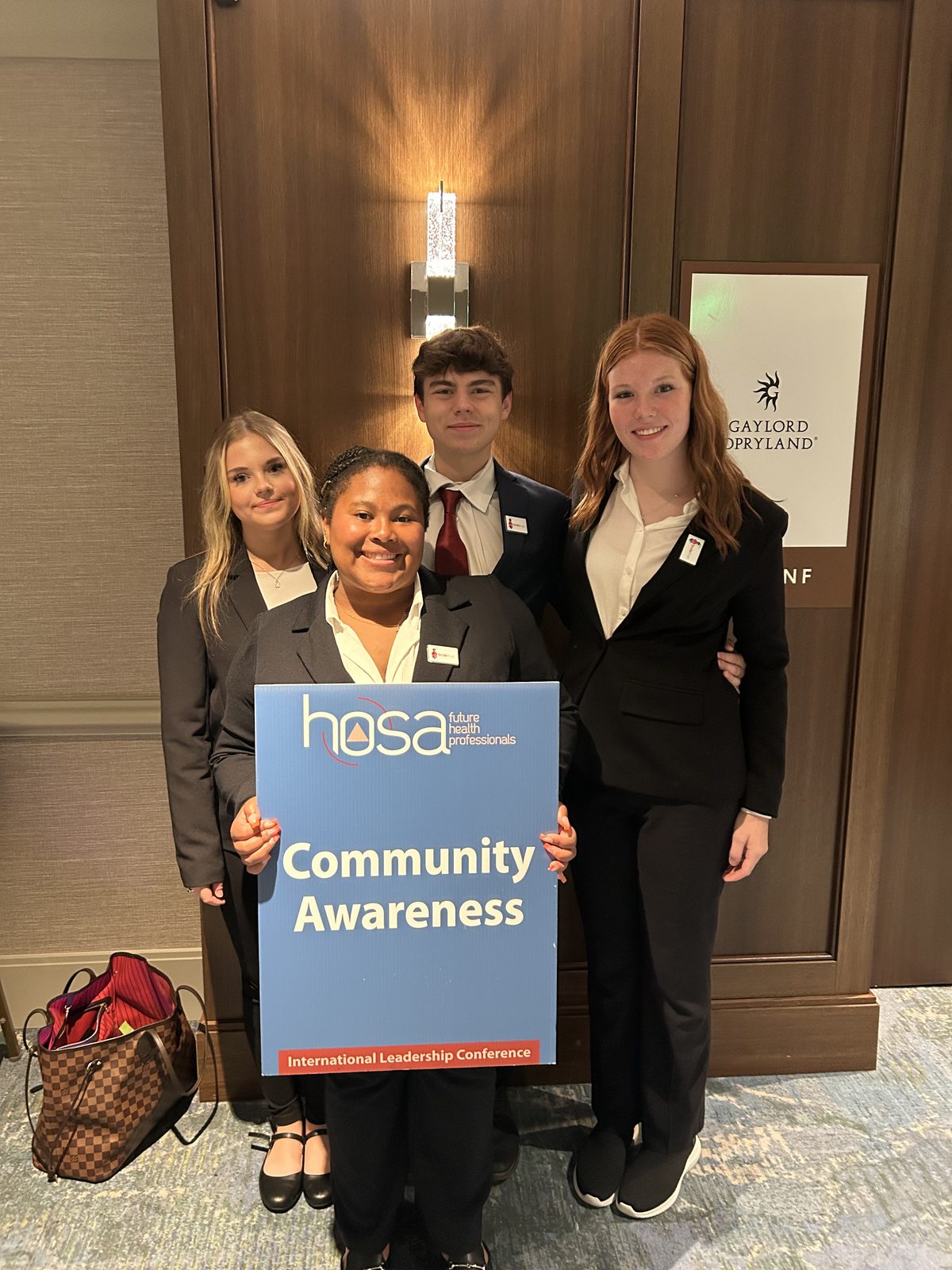
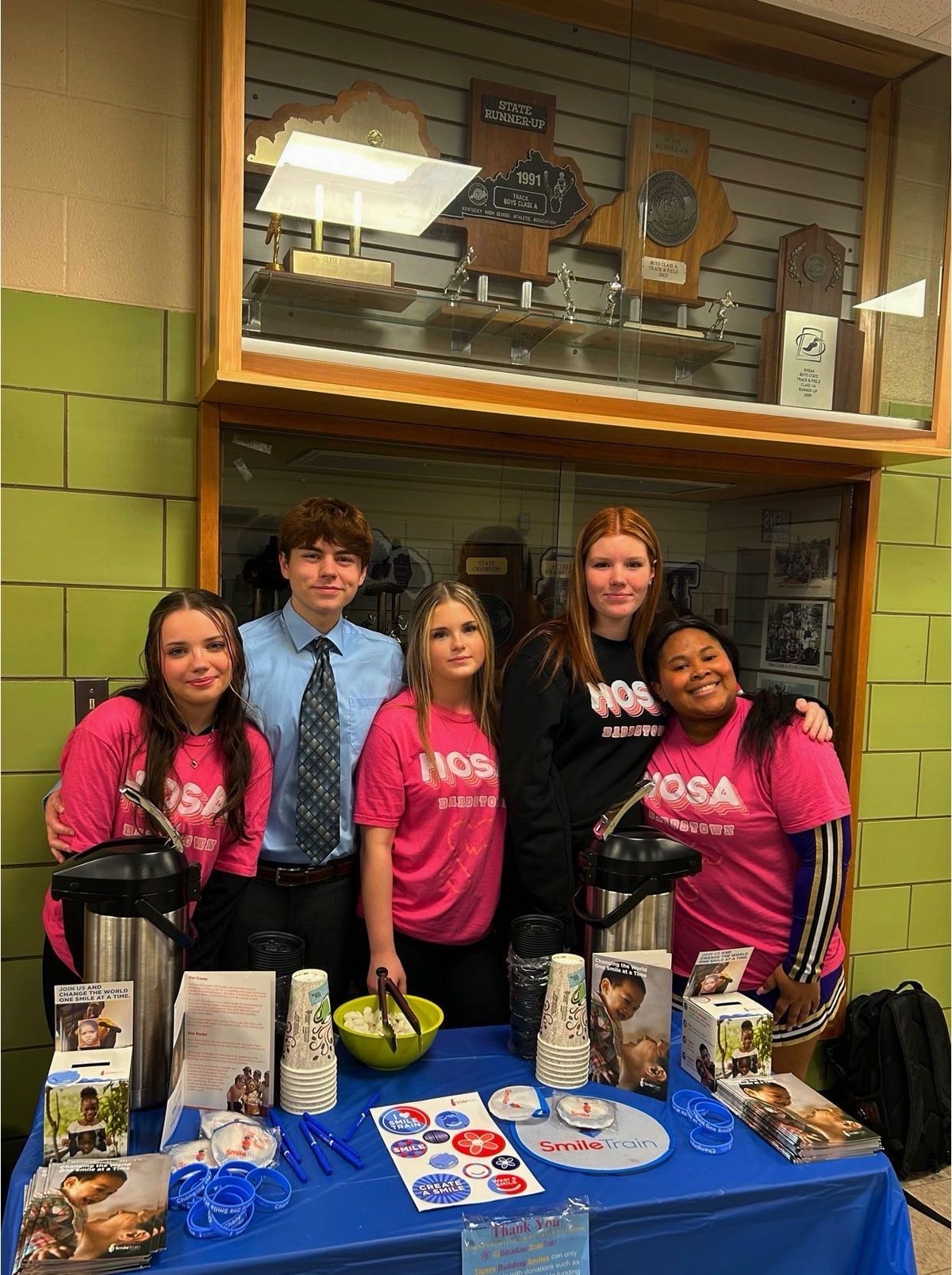
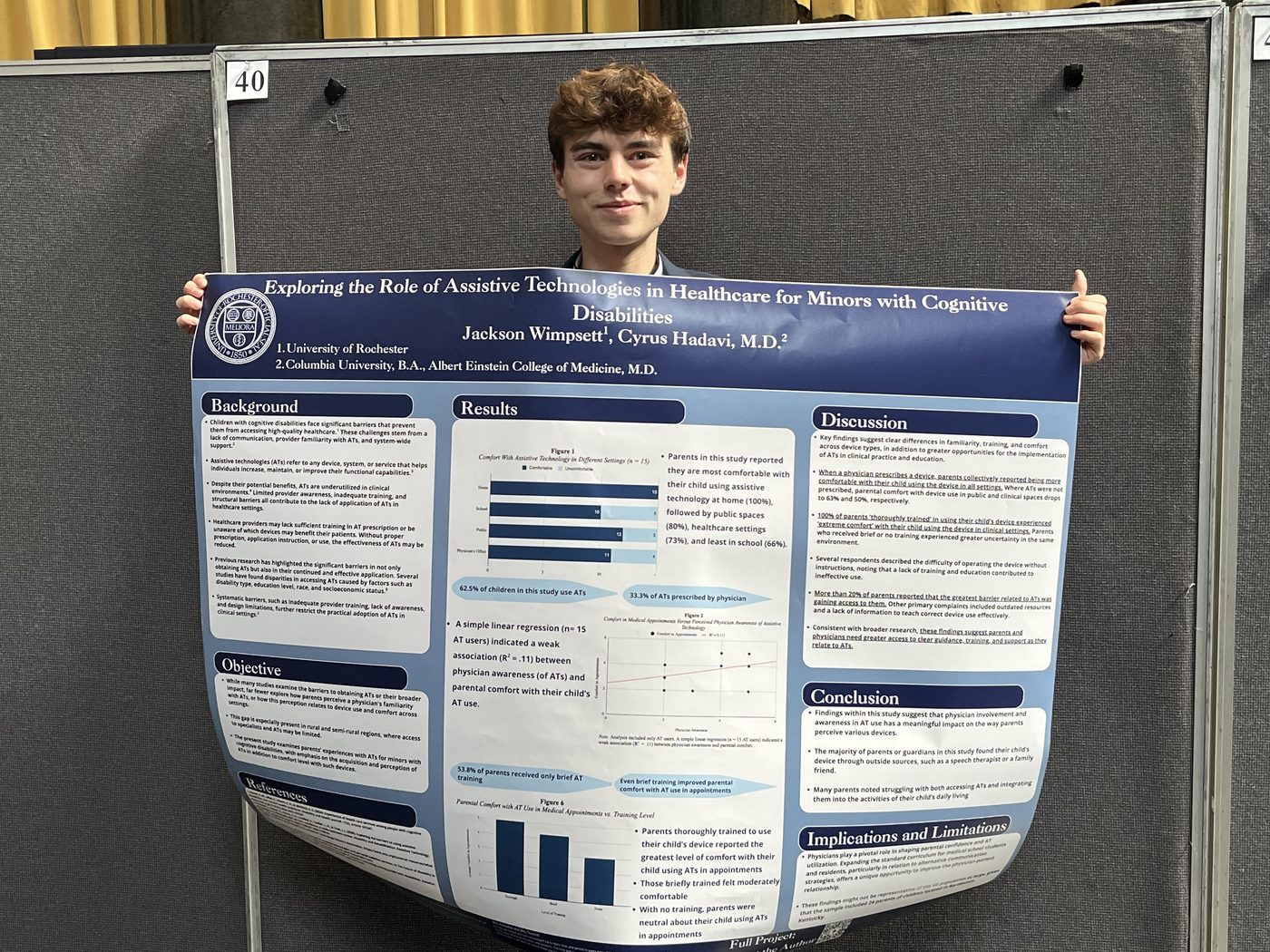
Almost no Kentucky high schooler graduates with real research experience. I did it from Bardstown with a survey, a mentor, and a lot of persistence: a published paper in Pathways: Stanford Journal of Public Health, a student-run undergraduate journal at Stanford that uses double-blind review, plus my own research poster and acceptances at two national conferences so far. I mentor students through that same road.
The study is real and you can read it right now. "Exploring the Role of Assistive Technologies in Healthcare for Minors with Cognitive Disabilities," published in Pathways: Stanford Journal of Public Health, Vol. 3 (2025), surveying 24 Bardstown families, mentored by Cyrus Hadavi, M.D. To be precise about what that is, since the Stanford name carries weight: Pathways is a student-run undergraduate journal based at Stanford with a double-blind review process. It is a real, reviewed publication, and it is not a Stanford faculty journal, and your student deserves to hear the difference from me rather than find it out later. This is the kind of project we would build together.
Read the published paperOne student may join me as a collaborator on my ongoing work in philosophy and religion. There is no menu of named projects to choose from, because everything I write belongs to one continuous research program. The question that runs through all of it is this: when explicit religious belief declines, what happens to the things religion once provided? Ritual, authority, belonging, sacrifice, and meaning do not simply vanish, and my writing traces where they go.
In practice, these projects are long-form written essays built on close reading, research, argument, and revision rather than experiments or surveys. Current and planned topic areas include secular ritual and where people find belonging outside of church; mourning and memorial practices in digital spaces; productivity, burnout, and work as a modern form of devotion; celebrity culture and fan attachment; education as a moral institution; and the way translation shapes how readers understand ancient religious texts.
A collaborator works alongside me on whichever piece is active. That means reading the sources, discussing the arguments, drafting sections, and revising them until they hold up. This track suits a student who loves big questions and serious writing.
On credit, before anyone enrolls: Paying me does not buy authorship or a publication. It buys an apprenticeship in how this kind of thinking and writing gets done. If a student's contribution rises to what a journal considers authorship, we agree to that in writing at the time it happens. If it does not, they are acknowledged honestly. I say this plainly up front so that nobody signs up expecting a line on a college application; that is exactly the expectation an honest program must refuse to sell.
Two honest boundaries apply. First, collaboration is limited to my philosophical and theoretical work, and my studies involving human participants are not open to student collaborators. Second, if a student brings me an empirical idea of their own that involves people, we can absolutely pursue it, but it runs through the full process below, including its own school-level IRB approval, with me serving as lead mentor on the project.
As a triple major in Brain & Cognitive Sciences, Psychology, and Religion, I'm strongest in psychology, neuroscience, religion, and philosophy. The projects I coach best are mixed-methods work: surveys, literature reviews, and long written academic pieces. I have foundational statistics and R coding experience from my university coursework, which is plenty for a solid high school project. If your student wants to build a particle accelerator, I'm not your guy. If they want to ask a real question about people, minds, beliefs, or ideas and answer it properly, I am.
A short application, mostly about what your student is genuinely curious about. Grades matter far less than curiosity and follow-through. I respond to every application within a week.
We talk through the idea, the timeline, and the cost, and I make sure this is actually the right fit before anyone commits to anything.
We narrow curiosity into a research question that a high schooler can genuinely answer in a semester. This step matters more than any other.
Your student reads what's already known and writes a short research proposal: what they're asking, how they'll answer it, and why it matters. I coach; they write.
Any project using human participants, even a simple survey, is reviewed and approved before a single response is collected. At the high school level that panel is a school administrator, a science or health science educator, and a qualified medical or mental health professional, with me participating as research mentor. I am one voice on that panel and never the deciding one, because a paid mentor should not be able to approve his own student's study.
Approval is more than gathering adults in a room. It means the school agrees in writing to host the review, participants who are minors give assent while their parents give written permission, participation stays voluntary and withdrawable, responses are anonymous wherever possible, and data lives in an account controlled by the student and their school rather than by me. If a school will not host the review, we redesign the project so it does not involve human participants. All of it is written out here.
Surveys go out, data comes in, and we make sense of it together. Basic statistical analysis and R coding support are available when the project calls for it.
Abstract, introduction, methods, results, discussion. A real paper with real structure, written by your student, edited relentlessly by both of us.
We target the right high school and undergraduate journals and conferences, and I coach the poster and presentation. I've made my own poster and submitted to two conferences, so we're not guessing at this part.